Xinhua
29 Jan 2026, 12:45 GMT+10
Persistent tariff threats have significantly undermined expectations that negotiations might stabilize transatlantic trade relations, raising doubts about whether the United States remains a reliable trading partner for the European Union.
BERLIN, Jan. 29 (Xinhua) -- German capital flows and trade have shown a simultaneous pullback with the United States, which analysts say reflects growing unease in the business community over the uncertainty of the U.S. economic policy.
According to a German Economic Institute report, German-U.S. economic and trade relations came under renewed strain after U.S. President Donald Trump returned to the White House in early 2025.
The downturn is adding pressure to Europe's largest economy and fuelling debate over whether Germany should further rely on the United States as a key economic partner.
FALLING INVESTMENT, EXPORTS
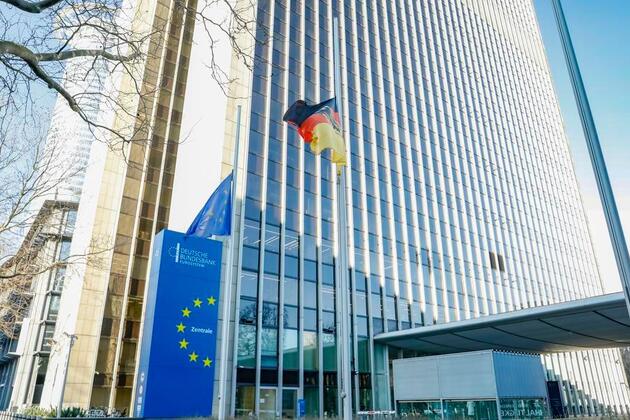
German investment and exports to the United States fell sharply last year, the report said, citing Deutsche Bundesbank data.
German direct investment in the United States declined to 10.2 billion euros (12.2 billion U.S. dollars) between February and November 2025, a 45 percent fall year-on-year. Compared with the 2015-2024 average, the 2025 figure was more than 24 percent lower.
Concurrently, exports to the United States weakened. Between February and October 2025, shipments declined by around 9 percent year-on-year. Automobile and auto part exports dropped nearly 19 percent, machinery about 10 percent, and chemical products by more than 10 percent.
Analysts argue that, as these sectors have long been pillars of Germany's industrial competitiveness, the export slump demonstrated strain in German-U.S. economic relations.
Speaking on the sidelines of the 2026 World Economic Forum annual meeting in Davos, Switzerland, Volkswagen Group Chairman Oliver Blume said that without a significant reduction in U.S. tariffs, further investment in the country would be difficult to justify. Plans for a new Audi plant could even be put on hold.
The report also warned that repeated U.S. threats of new tariffs have heightened market concerns over the outlook for transatlantic economic relations. The German business community believes that persistent pressure continues to suppress investment and trade confidence, further exacerbating difficulties in bilateral economic ties.
GROWING TENSIONS
Strained German-U.S. economic relations have prompted concerns in Germany over the direction of U.S. economic policy.
Sebastian Dullien, an economist at the Macroeconomic Policy Institute, said that German companies could increasingly view the United States as a high-risk market.
Persistent tariff threats, he added, have significantly undermined expectations that negotiations might stabilize transatlantic trade relations, raising doubts about whether the United States remains a reliable trading partner for the European Union.
Samina Sultan, an economist at the German Economic Institute, said that rising uncertainty has a clear dampening effect on investment and trade. "Trump's economic policies are unsettling companies, slowing transatlantic exchanges, and affecting not only German firms but also weakening the U.S. as a business location," she said.
Sentiment indicators have pointed to a widening trust gap. A poll published by Germany's ARD broadcaster in early January showed that about 75 percent of Germans now consider the United States an unreliable partner.
Moritz Schularick, president of the Kiel Institute for the World Economy, said that Germany should reduce dependence on a single market and expand investment ties with other countries to spread risks and strengthen resilience.
"Germany can no longer base its economic strategy primarily on the assumption of a stable and predictable U.S. partnership," he noted.
Ferdinand Dudenhoeffer, a German automotive economics expert, said that current U.S. foreign policy is harming European and German interests and that Germany needs to reassess its external economic strategy.
GOLD RESERVES DEBATE
The debate over Germany's gold reserves being held in the United States has been revived.
Germany holds the world's second-largest national gold reserves. For decades, more than 1,200 tonnes of German gold, or over one third of the total, have been stored in the vaults of the U.S. Federal Reserve Bank in New York.
Against the backdrop of rising geopolitical uncertainty and unpredictable U.S. economic policy, "There is no reason to continue storing 37 percent of Germany's gold reserves in the United States," Marie-Agnes Strack-Zimmermann, chair of the European Parliament's Committee on Security and Defense, was quoted by German magazine Der Spiegel as saying.
Emanuel Moench, an economist and former head of research at the Deutsche Bundesbank, told the German newspaper Handelsblatt that maintaining such a large share of gold reserves in the United States carries risks under current geopolitical conditions and should be reassessed.
Analysts believe that the renewed gold reserves debate highlights how strains in German-U.S. trade and investment ties are spilling over into broader questions of strategic trust, reflecting a widening split in transatlantic relations.
The concerns and developments are potentially reshaping transatlantic economic relations well beyond the current downturn, calling on Europe to place greater emphasis on strategic autonomy and diversification.
Get a daily dose of Manufacturing Mirror news through our daily email, its complimentary and keeps you fully up to date with world and business news as well.
Publish news of your business, community or sports group, personnel appointments, major event and more by submitting a news release to Manufacturing Mirror.
More InformationNew Delhi [India], January 28 (ANI): The India-European Union Free Trade Agreement (FTA) has sparked strong optimism across India's...
New Delhi [India], January 27 (ANI): Chief Minister Rekha Gupta on Tuesday said that the MoU signed between the Delhi government and...
New Delhi [India], January 27 (ANI): The just-signed India-European Union Free Trade Agreement (FTA) is set to create a future-ready...
On a bright day in mid-December 2025, members of the 35th Chinese medical team in Zanzibar worked in seamless coordination, as they...
New Delhi [India], January 27 (ANI): Prime Minister Narendra Modi on Tuesday hailed the India-EU Free Trade Agreement, reiterating...
New Delhi [India], January 27 (ANI): As India and the European Union ink the historic Free Trade Agreement, popularly dubbed the 'mother...
WASHINGTON, D.C.: American workers are incorporating artificial intelligence into their jobs at a rapidly accelerating pace, with a...
NEW DELHI/BRUSSELS: India is set to make its boldest move yet to open its tightly protected auto market, agreeing to sharply cut import...
SEOUL, South Korea: Plans by Hyundai Motor to introduce humanoid robots into its factories have sparked a warning from its powerful...
Persistent tariff threats have significantly undermined expectations that negotiations might stabilize transatlantic trade relations,...
New Delhi [India], January 29 (ANI): The India-EU FTA is set to unlock major trade expansion across sectors, even as certain teething...
New Delhi, [India] January 29 (ANI): Industry leaders at the India Energy Week 2026 underlined the growing role of natural gas in enabling...